DeckMp News · August 12, 2026
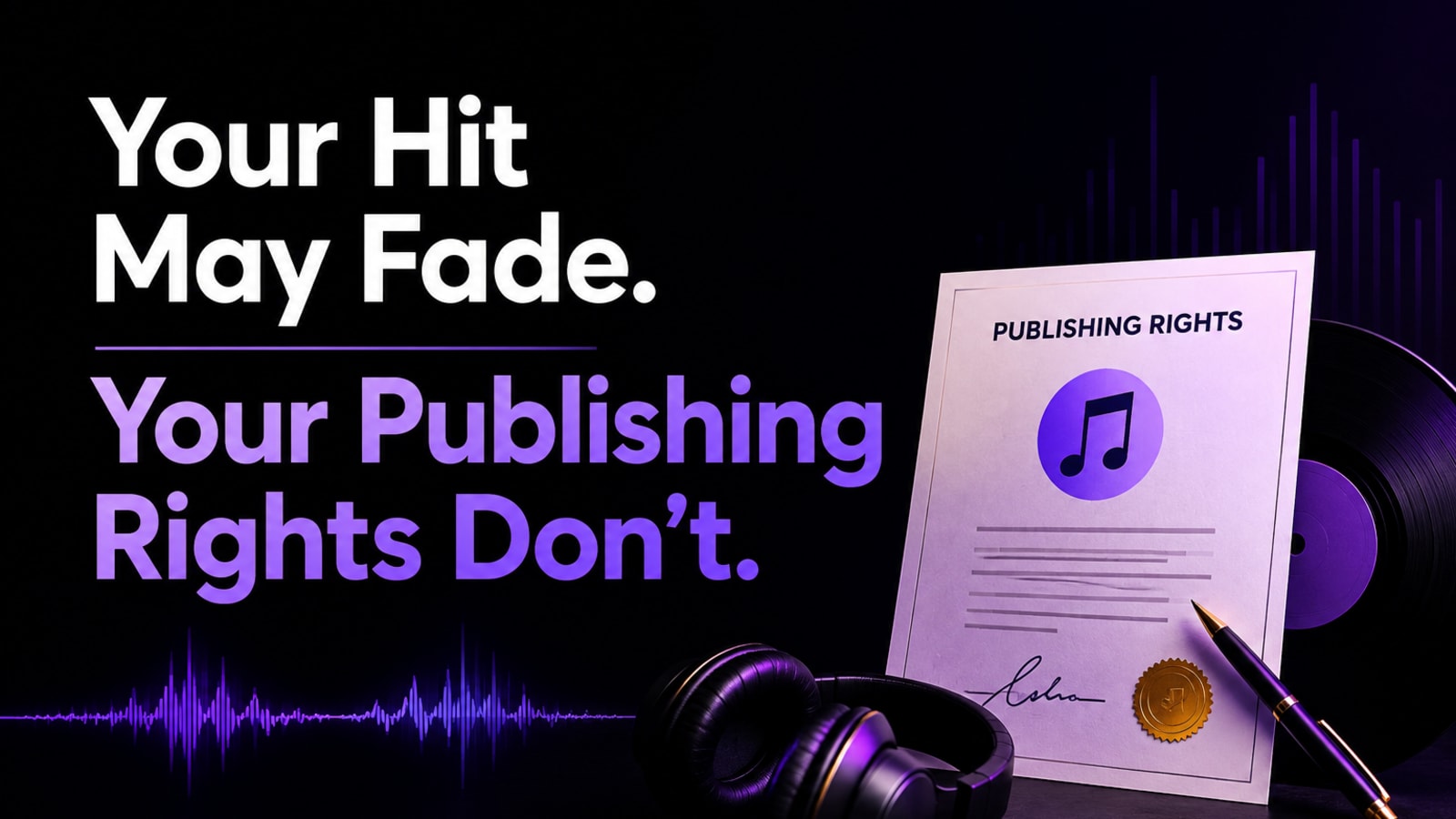
Your Hit May Fade. Your Publishing Rights Don’t.
# Music Publishing Rights Explained: What Independent Artists Need to Know
If you’re an independent artist who writes your own songs, your **music publishing rights** can be one of your most valuable long-term assets.
A song can have a life far beyond its initial release. It may stop trending, fall off streaming playlists, or receive less attention than your latest release. But that does not necessarily mean the song has stopped creating value.
Your songs can continue generating **music royalties** when they are streamed, performed, broadcast, licensed, or otherwise used.
That is why understanding **music publishing rights, songwriting rights, royalties, and copyright ownership** is essential for independent artists who want to build sustainable careers.
## What Are Music Publishing Rights?
Music publishing rights relate primarily to the **underlying musical composition** of a song, including the lyrics and music created by the songwriter or composer.
The composition is separate from the **master recording**, which is the specific recorded version of the song.
For example, if an artist writes and records an original song, there can be two distinct areas of rights:
**The composition:** the lyrics and music written by the songwriter.
**The master recording:** the particular recorded performance of that composition.
These rights can be owned, controlled, or administered by different parties depending on the artist’s agreements and business arrangements.
For independent artists, understanding this distinction is particularly important because owning or controlling your rights can have a significant impact on how you earn from your music.
## Why Are Publishing Rights Important for Independent Artists?
For many independent artists, the focus is naturally on releasing music, growing streams, building an audience, and securing opportunities.
But the long-term value of an artist’s catalogue can be just as important as the performance of their latest release.
A song may generate value through:
* Streaming
* Radio and television broadcasts
* Live performances
* Public performances
* Film and television licensing
* Advertising and commercial licensing
* Cover versions
* Other authorized uses of the composition
Depending on the use, different royalty and licensing mechanisms may apply.
This means a song does not necessarily stop being valuable simply because it is no longer a new release.
## Publishing Rights vs. Master Rights
One of the most important concepts for artists to understand is the difference between **publishing rights and master rights**.
The **publishing side** relates to the underlying composition: the lyrics and music.
The **master side** relates to the specific sound recording.
These rights can generate different types of income and may involve different agreements, organizations, administrators, labels, publishers, or other rights holders.
For example, a record label may own or control a master recording under a particular agreement, while a publisher may administer certain rights in the underlying composition.
An independent songwriter may also retain ownership of their composition and manage or administer their own publishing.
The exact arrangement depends on the contracts and rights involved.
## How Do Songwriters Earn Publishing Royalties?
Publishing royalties can arise when a composition is used in ways that generate royalties under applicable copyright and licensing systems.
Some important categories include **performance royalties** and **mechanical royalties**, although the rules and collection systems vary by territory and type of use.
For independent artists and songwriters, this makes proper registration and rights administration extremely important.
If your song is being used commercially but your ownership information, songwriter information, splits, or registrations are incomplete or incorrect, you may face difficulties identifying and collecting money that you are entitled to receive.
## Why Song Registration Matters
Creating a song is only one part of building its long-term value.
Artists and songwriters also need to make sure that their works are properly documented.
Important information can include:
* Song title
* Songwriters and composers
* Ownership percentages
* Contributor information
* Publisher information, where applicable
* Relevant identifiers
* Registration information
* Agreements and split documentation
Keeping accurate records can help reduce confusion when a song becomes successful or when multiple people contribute to its creation.
## What Is a Song Split?
When several people contribute to a song, they may agree to divide ownership of the underlying composition.
These arrangements are commonly referred to as **song splits**.
For example, an artist might write lyrics, a producer might contribute to the composition, and another songwriter might contribute additional musical elements.
The parties may agree on how the composition is divided.
The important point is that these agreements should be clearly documented.
A verbal understanding in a studio can become difficult to resolve years later when a song suddenly becomes successful.
**Clarity at the beginning can prevent conflict later.**
## Your Music Catalogue Can Create Long-Term Value
One of the biggest reasons independent artists should understand publishing is that their catalogue can continue creating value over time.
Your newest release may receive most of the attention today.
But your older songs can continue to be discovered, streamed, performed, licensed, or used in new contexts years later.
This is why a successful music career should not be measured only by the performance of your latest song.
Your **catalogue is an asset**.
The better you understand your rights and how those rights generate income, the better positioned you are to build long-term value from the music you create.
## Common Music Publishing Mistakes Independent Artists Should Avoid
Many artists focus heavily on recording and releasing music while overlooking the administrative side of their careers.
Some common mistakes include:
**Not documenting songwriting splits:**
If multiple people contributed to a song, unclear ownership can create problems later.
**Confusing publishing rights with master rights:**
They are separate areas of rights and can be controlled by different parties.
**Failing to keep accurate records:**
Contracts, split agreements, registrations, contributor information, and ownership records should be organized and accessible.
**Assuming streaming automatically takes care of everything:**
Different rights and royalty streams can involve different systems and organizations.
**Signing agreements without understanding the rights involved:**
Artists should understand what they are assigning, licensing, or retaining before entering into an agreement.
## How Independent Artists Can Protect Their Music Rights
Building a sustainable music career requires more than creating great songs.
Artists should develop good rights-management habits from the beginning.
Keep clear records of your songs, collaborators, ownership splits, agreements, registrations, and relevant rights information.
Understand the difference between your **composition and master recording**.
Know who owns or administers each right.
And before signing an agreement involving your music rights, consider getting appropriate professional or legal advice so you understand what you are agreeing to.
## Music Publishing Is Part of Building a Sustainable Career
For independent artists, music publishing should not be treated as an afterthought.
Your songs are intellectual property, and your catalogue can potentially create value long after a release campaign has ended.
Understanding **music publishing rights, copyright, songwriting ownership, and royalties** gives artists greater awareness of how their music can generate income and how their creative work can retain value over time.
The music industry will continue to change. Platforms will evolve. Trends will change. New artists will emerge.
But one thing remains fundamental:
**The songs you create have value. Understanding your rights is one of the ways you protect that value.**
Independent artists, **do you know who owns or manages the publishing rights to your songs?**
0 comments
Comments
Share feedback on this story.
Sign in to leave a comment.